Latvia Golden Visa · Investor Residence Permit

 Latvia is an EU member state since 2004 · Schengen · Euro
EU residence for your family. From €65,000. No relocation.
Founded by a former Latvian diplomat · every case filed by a sworn advocate of the Latvian Bar.
From €65,000All-in for the whole family · every fee disclosed below
- Refunded in full if refused
- Legal fee only after approval
- First call free, no deposit
العربية؟ WhatsApp Dr. Mohamed
What the "Latvia Golden Visa" is in law
What people call the Latvia Golden Visa is, in law, an investor temporary residence permit under Article 27(1)(10) of Latvia's new Immigration Law, in force from 15 September 2026. €50,000 into the share capital of a nine-year-old Latvian company, €10,000 to the Latvian state budget — and a two-year Latvian residence card (EU/Schengen) in your name, renewable, for you, your spouse and your children under 18. Read the complete guide →

Riga, LatviaPhoto: Martti Salmi / Unsplash
Whole familySpouse & children under 18
Latvian residence card (EU/Schengen)Travel in 29 Schengen countriesRefunded in full if refused€50,000 share capital
Filed by a sworn advocate
Every application is filed by Mārtiņš Grīnbergs, sworn advocate of the Latvian Bar since 2008. Latvian Bar register
Former Latvian diplomat
Founder Jānis Rupeiks spent 20 years in Latvia's diplomatic service, including Deputy Head of Mission in Cairo and consular officer in New Delhi. Meet the team
Verifiable company
SIA "Las Palmas", Reg. 42103079906, a Latvian operating company since May 2017. Lursoft commercial register
Statutory route
Article 27(1)(10) of the Latvian Immigration Law in force from 15 September 2026. Read the law on likumi.lv
Exhibiting at IREX
Meet us in person at IREX Dubai (30–31 January 2027) and IREX Mumbai (9–10 April 2027). Event details
Last verified: October 2026
Every fee — including the €1 share buyback at exit — is in writing before you pay.
Our operating brand · Spēka noma
Who is behind this
You will meet us by video call before you pay anything. We require it.
JR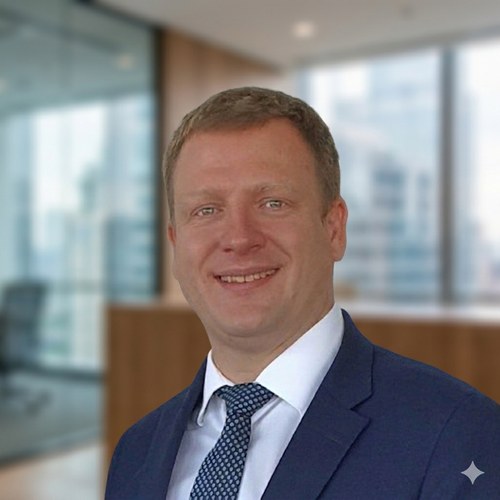
Jānis Rupeiks
Founder
- Deputy Head of Mission, Embassy of Latvia in Cairo (2018–2021)
- First Secretary & Consular Officer, Embassy of Latvia in New Delhi (2014–2017)
- Legal Department, Ministry of Foreign Affairs of Latvia (2008–2010)
- 20 years total in Latvia's diplomatic service (2002–2022)
- Owner, SIA "Las Palmas" — 9-year Latvian operating business
- LL.M. Riga Graduate School of Law · Executive MBA, ESCP Business School
MG
Mārtiņš Grīnbergs
Legal Counsel · files every application
- Sworn advocate of the Latvian Bar since 2008 — 18 years standing
- Adviser to the Minister of Environmental Protection, Latvia (2021–2025)
- Adviser to the Minister of Health, Latvia (2019–2021)
- Former Partner, Law Firm MPKV (2013–2019)
- Education: LL.M., University of Latvia Faculty of Law
Verify at advokatura.lv · search "Grīnbergs Mārtiņš"
MTG
Dr. Mohamed Taha Ghobashy
Middle East Representative · UAE & Egypt
- Founder and owner of Troy Consultancies (UAE) — operating since 2014 (12 years in business advisory)
- Owner of ECI Certification Body — Latvia, Ireland, Poland
- MBA, SDA Bocconi School of Management (Milan) · Alexandria University, Egypt
- First point of contact for GCC residents (expatriates living in the UAE, Saudi Arabia, Qatar, Kuwait, Bahrain, Oman) and the wider Middle East
- Arabic-speaking · Arabic & English
WhatsApp UAE · +971 55 100 0506 · Egypt · +20 109 110 7929
What you get — and what it is not
A temporary residence permit in Latvia, issued for up to two years and renewable, for you, your spouse and your children under 18. Latvia is a full member of the EU, the Schengen Area and the eurozone, so your card is issued by an EU state — which is why investors call it an EU Golden Visa or Europe Golden Visa. Here is exactly what that card does, and does not, give you.
✓What you get
- Live, work and study in Latvia — employment, your own business or company directorship. No obligation to actually move.
- Travel across 29 Schengen countries visa-free for up to 90 days in any 180-day period — no more embassy queues before a business trip or family holiday.
- One application for the whole family — spouse and children under 18 under the same €50,000 subscription.
- No relocation, no language test, no annual registration — a short visit to Riga at each two-year renewal for biometrics and the new card.
- Free public schools for resident children and Latvian universities at resident rates. What it gives your children →
- A Latvian company, if you want one — it can trade across the 27-state EU single market and invoice in euro. Opening a euro bank account is more straightforward with a residence card, subject to each bank's checks.
!What it is not
- Not a right to live or work in other EU states. Germany, France or any other EU country needs its own permit, or EU long-term resident status after five years of genuine residence in Latvia. Stays elsewhere in Schengen follow the 90-in-180-days rule.
- Not permanent residence or citizenship. Both are separate routes: PR needs five years of continuous residence in Latvia, Latvian at A2 and locally documented means; citizenship by naturalisation from year 10. Not an automatic outcome of this permit.
- Not a refundable investment. At exit the company buys your shares back for €1 — economically, the €50,000 is the price of the residence. It is returned in full only if OCMA refuses.
- Not open to everyone. Russian and Belarusian nationals are excluded by law. Iranian nationals with GCC or other foreign residency: please contact Dr. Mohamed Taha Ghobashy.
- Not permanent by itself. It is a two-year permit that you renew for as long as you remain a shareholder and the company meets its obligations. We would rather you hear this now than discover it later.
29Schengen countries you can travel through without a visa
27EU member states in the single market a Latvian company can sell into
€Euro since 2014 — no currency risk inside the eurozone
2 yrsRenewable card for you, your spouse and children under 18
Open to Egyptian, GCC-resident, Jordanian, Lebanese, Syrian, Iraqi, Moroccan, Tunisian, Algerian, Libyan, Sudanese, Pakistani, Indian, Bangladeshi, Turkish and Brazilian families, among other nationalities. Guides: Complete Latvia Golden Visa guide → · What changed under the new Immigration Law → · Egyptian families · UAE residents · Indian families · Pakistani families · Saudi residents · Bangladeshi families · Turkish citizens · Latvia vs Portugal · Family benefits
Full fee disclosure — what you pay, and when
Every fee, every recipient, every refund status. Nothing on top: we do not charge a separate service fee, and we quote your family's exact total in writing before you pay anything.
1
Week 4–5
€50,000
Share capital wired to SIA "Las Palmas" on signing. Within 48 hours you are registered as a shareholder in the Latvian Company Register.
2
In the course of the application
€10,000
Latvian state budget payment required by Article 27(1)(10). Exact timing confirmed in writing in your engagement letter.
3
At filing
€160 / €280 / €560
OCMA state fee — standard 30 days, accelerated 10 business days or urgent 5 business days. Paid at filing; not refundable.
4
Decision
OCMA decides
Review by OCMA, the State Security Service (VDD) and the Financial Intelligence Unit. Then one of two outcomes:
Approved
- €3,000 legal fee is invoiced by the law office — only now, never up front.
- Within 3 months you collect your residence cards in Riga — one day is enough.
- Renew every two years with a short visit to Riga. No assistance fee for renewals in the first five years.
Refused
- €50,000 returned in full through a statutory share-capital reduction under the Latvian Commercial Law — about one month.
- €3,000 legal fee is never charged.
- You lose only the OCMA state fee paid at filing (€160 / €280 / €560).
When you stop renewing: SIA "Las Palmas" buys your shares back for €1. Economically, the €50,000 was the price of the residence — not a refundable investment. This is in your shareholder agreement before you pay.
Your family's cost, itemised
Published figures only. Pick the processing speed; the family size changes only the separate insurance estimate.
Used only for the health-insurance estimate. The €50,000 and €10,000 are paid once per investor, not per family member.
| Share capital in SIA "Las Palmas" (on signing · refunded in full if refused) | €50,000 |
| Latvian state budget payment (in the course of the application) | €10,000 |
| Legal fee (only after a positive decision) | €3,000 |
| OCMA state fee | €280 |
| Base fees | €63,280 |
Realistic all-in from €65,000 once translations and apostilles (~€200–€500), courier and travel to Riga are included. Complex source-of-funds reviews or families above four can run higher.
If refused, you get back: €50,000. You lose only the OCMA fee (€280). The €3,000 legal fee is never charged.
Outside the programme cost: private health insurance for 4 family members — roughly €1,200–€2,000 per year (~€300–€500 per person per year), arranged separately.
Full fee table — all three processing speeds
| Item | Amount (EUR) | Paid to | Refundable |
|---|---|---|---|
| Share capital subscription into SIA "Las Palmas" | 50,000 | SIA "Las Palmas" | Only if refused* |
| State budget contribution | 10,000 | Ministry of Finance, Latvia | No |
| Legal fees (filing, contracts, OCMA) — after a positive decision only | 3,000 | Latvian law firm | Never due if refused |
| State processing fee — standard (30 days) | 160 | OCMA | No |
| State processing fee — accelerated (10 business days) | 280 | OCMA | No |
| State processing fee — urgent (5 business days) | 560 | OCMA | No |
| Base fees, standard processing | ~63,160 | — | — |
| Base fees, urgent processing | ~63,560 | — | — |
* Figures in euros. Base fees total €63,160–€63,560. Real all-in for most families runs from €65,000 once translations, apostilles, courier, and travel to Riga are included. The €50,000 is returned in full if OCMA refuses the permit; at a normal exit the shares are bought back for €1. We do not charge a separate service fee on top of the figures in this table.
About the €1 buyback and renewals
At the end of your engagement — when you decide not to renew the permit further — SIA "Las Palmas" buys your shares back for €1 nominal consideration, a clean legal closing of a share-capital investment made under Article 27(1)(10) of the Latvian Immigration Law. This mechanism is written transparently into your shareholder agreement before any payment is made.
Economically, the €50,000 functions as the programme fee. Legally, it takes the form of a share subscription because the Latvian statute requires this structure for the investor residence route. We mention it openly here, in every consultation, and in every contract — so there are no surprises down the line.
The permit is issued for up to two years and renewed for further two-year terms for as long as you wish to keep it. The €50,000 remains held as share capital throughout, OCMA state fees apply at each renewal, and we charge no assistance fee for renewals during the first five years. Renewal state fees are those in force in Latvia at the time and are confirmed in writing before each renewal.
Most families find this completely clear once explained. If anything feels unclear, we welcome the conversation — at the first call, during document review, or any time before you sign.
Questions about a specific fee? The first call is free, and we quote your family's exact total in writing before you pay anything.
We reply within one business day. العربية؟ WhatsApp Dr. Mohamed.
Why Latvia, why now
On published terms, October 2026, Latvia's investor residence permit is the lowest-cost regulated EU residence-by-investment programme currently open — from €65,000 for an entire family. Portugal's Golden Visa rose to €500,000 and removed real estate in 2023; Greece raised its minimum to €800,000 in the main zones in 2024; Spain closed its programme in April 2025. Same core result — a renewable EU residence permit with Schengen travel and no obligation to relocate — at a fraction of the price.
Full comparison table — residency and PR/citizenship conditions
Permanent residence and citizenship are separate routes everywhere, each with its own residence, language and income conditions.
| Country | Minimum investment | All-in cost (family) | Physical residency | PR / Citizenship |
|---|---|---|---|---|
| Latvia | €50,000 | from €65,000 | Short visit at each 2-year renewal | PR Yr 5 (separate route: continuous residence + A2 Latvian) · Cit. Yr 10 |
| Portugal | €500,000 (fund) | ~€550,000 | 7 days / year | PR Yr 5 · Cit. Yr 5 |
| Greece | €400,000–€800,000 | ~€420,000–€820,000 | None | PR Yr 5 · Cit. Yr 7+ |
| Malta | €700,000+ | ~€700,000+ | None | PR immediate · Cit. (naturalisation) |
| Hungary | €250,000 | ~€260,000 | None | PR Yr 3 · Cit. Yr 8 |
| Cyprus | €300,000 | ~€310,000 | Every 2 years | PR immediate · Cit. Yr 7+ |
| Spain | Closed | — | — | Programme paused to new applications since April 2025 |
All figures approximate for the 2026 programme year, based on publicly available programme terms (verified October 2026). Latvia is currently the lowest-cost regulated EU investor-residence programme in operation. Latvia vs Portugal in detail →
What Latvian residence gives your children
For most Middle East and South Asian families, the education and future of the children matter more than the €65,000 programme cost. Here is what the permit — and Latvia itself — offers them.
Free public schools
Children of residence-permit holders have the same right to education as Latvian citizens. Public preschool, primary and secondary schools (ages 5–19) are free for residents.
Universities at resident rates
University of Latvia, Riga Technical University and Riga Stradiņš University teach in Latvian and English at €2,000–€7,000/year — vs €30,000+ at UK universities or $40,000+ in the US for international students.
EU universities, if you relocate
Families who actually move and, after five years, qualify for EU long-term resident status (separate route: continuous residence, Latvian A2, documented means) can access EU universities at resident rates — e.g. the Netherlands at €2,694/year vs €15,000+ as an international student.
Healthcare
On the temporary permit, families hold private health insurance (~€300–€500 per person per year, EU-wide). Children in Latvia are entitled to standard state-funded childhood vaccinations from day one; full state healthcare follows only after permanent residence under its separate conditions.
Schengen-wide educational mobility
Summer language programmes in France, Germany or Italy without visa applications; Erasmus+ exchanges once enrolled in a Latvian institution; free travel across all 29 Schengen states.
An illustrative saving
For a family with two children studying in the EU, the gap between EU-resident and international-student tuition can be €100,000–€300,000 across two degrees — an illustrative figure that depends on country, course and status. Full family-benefits guide →
Life in Latvia — a safe, green country on the Baltic Sea


🎓Free public schools for resident children
✈️Visa-free Schengen travel
🇪🇺EU member since 2004 · euro since 2014
🗣️English widely spoken in Riga
🛫Direct flights across Europe from Riga
Photos via Unsplash: Kseniia Samoylenko, Gints Gailis, Kristaps Grundsteins, Viesturs Brolišs, Martti Salmi, Eduards Žiborkins.
How the process works — the first step is free
1
First call · week 1 · free, no deposit
A free 30-minute video call with the founder. No contract, no deposit, no mailing list. We answer every question about the programme, the fees, the €1 buyback, and your specific situation.
2
Document review · weeks 2–4
You send passports, family documents, and your source-of-funds file. Mārtiņš reviews everything personally before any money changes hands. Around 1 in 10 applicants are turned away here — and we tell them before they pay us.
3
Contract and €50,000 share capital · weeks 4–5
You sign the shareholder agreement and the engagement letter. The €50,000 is wired to SIA "Las Palmas", and within 48 hours your name is entered into the Latvian Company Register as a shareholder. If OCMA refuses, the €50,000 is returned in full (statutory share-capital reduction, about one month). The €10,000 state budget payment is made in the course of the application, at the point confirmed in your engagement letter. The €3,000 legal fee is invoiced only after a positive decision.
4
Filing · week 5
Mārtiņš files at the Latvian embassy nearest you — for GCC residents typically Cairo or Abu Dhabi — or directly at OCMA in Riga. The OCMA fee is paid now. Compare the two filing routes →
5
Processing · weeks 5–10
OCMA reviews, with VDD and Financial Intelligence Unit screening. Statutory windows: 30 days standard, 10 business days accelerated, 5 business days urgent — realistically 2 to 2.5 months from embassy filing to decision. We recommend accelerated for most families.
6
Cards in Riga · weeks 10–12
After the positive decision you have 3 months to collect your residence cards in Riga; one day is enough. After that, the only mandatory presence is a short visit at each two-year renewal, for biometrics and the new card — the annual registration of the old law no longer applies.
Step one costs nothing and commits you to nothing — a 30-minute video call where every question is answered before you sign or pay anything.
We reply within one business day. العربية؟ WhatsApp Dr. Mohamed.
Important to know — honest disclosure
A client who understands the realistic picture stays a happy client. Here is what we tell every applicant on the first call, and in writing in the engagement letter, before any payment changes hands.
Two-year permit, renewed in Riga
Under the Immigration Law in force from 15 September 2026 the investor permit is issued for up to two years and renewed; the annual registration of the old law is abolished. Although you do not have to live in Latvia, each permit holder in the family travels to Riga at each renewal for biometric capture and card collection. The renewal application itself can be submitted electronically by Mārtiņš via the latvija.lv portal. We schedule the trip, book the OCMA slot, and coordinate hotels.
New law 2026 — limits that now apply
A single company may hold a maximum of ten investor permits on this route, so places with SIA "Las Palmas" are limited. Russian and Belarusian nationals are excluded from the route by law. Under Article 28 the Cabinet of Ministers may suspend the route for nationals of specified countries for up to five years; no such regulation has been issued to date.
Realistic processing: 2 to 2.5 months, and a three-agency review
Statutory decision windows are 30 / 10 / 5 days, but the realistic end-to-end timeline — from embassy filing to permit in hand — is 2 to 2.5 months. Document transit, financial-source review and multi-agency security screening account for the difference: since 2024–2025 investor files are reviewed not only by OCMA but also by the Latvian State Security Service (VDD) and the Latvian Financial Intelligence Unit. Clean, well-documented source of funds is essential — we triage this before any money moves.
Permanent residence is a separate route — relocation + A2 Latvian
The investor permit does not lead to permanent residence by itself. Permanent residence / EU long-term resident status requires five years of genuinely continuous residence in Latvia (absences of no more than 6 consecutive or 10 cumulative months), Latvian language at A2 level, sufficient locally documented means, and a Latvian history and culture course. An investor who visits only a few days a year does not accrue this. Clients who do not relocate simply keep the temporary permit and renew it every two years — that path needs no Latvian language and no relocation.
Citizenship is a 10-year path with conditions
Latvian citizenship by naturalisation is a long-term path that requires 10 years' lawful residence, B1 Latvian language, a civic-knowledge exam, and — depending on your nationality — consideration of dual-citizenship rules. We discuss whether citizenship fits your specific situation during the first call rather than ruling it in or out on a website.
Your €50,000 is share capital, not a fee
The €50,000 enters SIA "Las Palmas" as share capital — your name is registered on the Latvian Company Register as a shareholder. When you exit the programme and stop renewing, the company repurchases the shares for €1 nominal under the agreement you sign before paying. In economic terms it functions as a programme fee; the legal structure is fully real and disclosed.
Where you file — embassy or Riga
Your initial application is submitted on paper either at a Latvian embassy in your region (Cairo, Abu Dhabi, New Delhi and others — realistic timeline 2 to 2.5 months, with optional DHL forwarding to save about a week) or in person at OCMA in Riga (2–3 days in the country, no embassy step). The initial application cannot be filed electronically; two-year renewals can. We recommend the right route on the first call. Read the full comparison of the two filing routes →
If any of these items would change your decision, we want you to know now — not after you have paid. Every one of these points is also set out in your engagement letter and in the shareholder agreement, in writing, before the bank transfers happen. All risks and downsides, in full →
Frequently asked questions
What is the cheapest golden visa in Europe in 2026?
On published programme terms (October 2026), Latvia's investor residence permit is currently the lowest-cost regulated EU residence-by-investment programme in operation: from €65,000 total for a family, against roughly €250,000+ for Hungary, €300,000+ for Cyprus, €400,000–€800,000 for Greece, €500,000+ for Portugal, and €700,000+ for Malta. It grants a renewable two-year Latvian residence permit with travel across the 29-country Schengen Area and no requirement to relocate, covering the principal applicant, spouse, and children under 18 in a single application. See the full 2026 cost comparison.
Is the Latvia Golden Visa legitimate?
Yes. It is a statutory route in operation since 2010, now codified in Article 27(1)(10) of the new Latvian Immigration Law in force from 15 September 2026, and administered by the Latvian Office of Citizenship and Migration Affairs (OCMA/PMLP), with security review by the Latvian State Security Service (VDD) and the Financial Intelligence Unit. OCMA's published statistics show approximately 149 investor permits issued in 2024 and 201 in 2025 under the predecessor provision. Applications through Latvia Residence are filed by a sworn advocate of the Latvian Bar, and the operating company SIA "Las Palmas" (Reg. No. 42103079906) is verifiable in the Latvian commercial register via Lursoft.
Do I have to live in Latvia?
No, you don't have to live in Latvia. The only physical presence required is a short visit to Riga at each two-year renewal for biometrics and collection of the new residence card — the annual registration of the old law has been abolished. Beyond that, you keep your home and business in the UAE, Saudi Arabia, Egypt, Pakistan, India, or anywhere else. Your permit remains valid as long as the company continues to meet its legal requirements — which is our responsibility, not yours. Permanent residence is a separate route that does require living in Latvia; see below.
What changed for investors under Latvia's new Immigration Law in 2026?
A new Imigrācijas likums came into force on 15 September 2026 and replaced the 2002 law. The share-capital investor route moved from the old Article 23 to Article 27(1)(10). The permit is now issued for up to two years and renewed, instead of five years with annual registration — the annual registration requirement is abolished. The thresholds are unchanged: €50,000 into the share capital of an operating Latvian company plus €10,000 to the state budget. A single company may now hold a maximum of ten investor permits on this route. Russian and Belarusian nationals are excluded from the route. Under Article 28 the Cabinet of Ministers may suspend the route for nationals of specified countries for up to five years; no such regulation has been issued.
Can my wife and children apply with me?
Yes. Spouses and children under 18 are included in the investor's application under the same €50,000 subscription. Persons under legal guardianship are also covered. Each family member pays their own small state fees (~€160 per person per application); the €50,000 and €10,000 are paid once per investor, not per family member.
I am a national of Egypt / India / Pakistan / Sudan / Syria / Iraq / Morocco / Algeria / Tunisia / Libya / Lebanon / Jordan / Brazil. Can I apply? (Iranian with GCC or other foreign residency — please call.)
Yes. The programme is open to all of these nationalities. We file at the nearest Latvian embassy to where you live — which in the GCC is typically the Latvian Embassy in Cairo or the Latvian consular section in Abu Dhabi. If there is no Latvian embassy in your country, we file at the nearest one or directly in Riga. Egyptian families: see our dedicated Latvia residence permit guide for Egyptians for nationality-specific eligibility, source-of-funds guidance from Egyptian banks, and process details.
Show 14 more questions
Is the €50,000 really a non-refundable fee?
In economic terms, yes. In legal terms, it is share capital that the company buys back for €1 at the end of your engagement — a structure the Latvian law permits and the Latvian tax authority recognises. We write this into your contract in plain language before you pay. If you want a refundable investment product, the Greek, Portuguese, and Maltese programmes offer routes that are closer to that — and cost six to thirteen times more than this one.
What happens to my money during OCMA's 2 to 2.5 month review?
The €50,000 share-capital subscription is wired to SIA "Las Palmas" on signature of the engagement letter, and within 48 hours your name is entered into the Latvian Company Register as a shareholder of SIA "Las Palmas". If OCMA refuses the residence-permit application, the €50,000 is returned to you in full through a statutory share-capital reduction under the Latvian Commercial Law — a procedure that takes about one month. The €10,000 state budget payment required by Article 27(1)(10) is made in the course of the application, at the point confirmed in your engagement letter. Our €3,000 legal fee is not paid up front — it is invoiced only after a positive OCMA decision. The OCMA examination state fee paid at filing (€160 / €280 / €560, depending on processing speed) is not refundable. The likelihood of an OCMA refusal at the decision stage is in practice low, because Mārtiņš reviews your source-of-funds documentation in detail before any wire transfer, and turns files away that would not survive the OCMA / VDD / FID review.
How is this different from a Portuguese or Greek Golden Visa?
Same core result — a renewable EU residence permit with Schengen access and no obligation to relocate — at roughly one-quarter to one-thirteenth of the price. Permanent residence and citizenship are separate routes in each of these countries, with their own residence, language and income conditions. The trade-off: Latvia is a smaller country. If your goal is to physically relocate to Lisbon or Athens, you should pay more and go there. If your goal is the legal right to live and travel in the EU without physically moving your life, Latvia is the most affordable legitimate way to obtain it.
What happens when the two-year permit expires?
You renew it. Under Article 27(1)(10) the investor permit is issued for up to two years and is renewable for further two-year terms for as long as you remain a shareholder and the company meets its statutory obligations. Your €50,000 remains held as share capital throughout, OCMA state fees apply at each renewal, and we charge no assistance fee for renewals during the first five years. The €1 buyback happens only when you choose to exit the programme. Renewal state fees are those in force in Latvia at the time and are confirmed in writing before each renewal — not on this page, because any figure we publish today could be wrong by the time it applies to you.
How long does the full application process take from start to finish?
From your first call to the moment you collect your Latvian residence card in Riga, typical timing is 10 to 12 weeks. Week 1 is the first call. Weeks 2 to 4 cover document review and source-of-funds preparation. Weeks 4 to 5 are contract signing, the €50,000 share-capital transfer to SIA "Las Palmas", and your registration as a shareholder in the Latvian Company Register. Filing happens in week 5. OCMA processing is 30 calendar days (standard), 10 business days (accelerated), or 5 business days (urgent). After OCMA's positive decision you have three months to travel to Riga for card collection — a single day's trip.
Can I work in Latvia with this residence permit?
Yes. The investor residence permit includes the right to be employed by a Latvian employer or to run a Latvian business. Remote work for a non-Latvian employer is also generally permitted — the Latvian state does not object — but tax treatment depends on the laws of your home country and your employer's location, which we are not qualified to advise on.
Can I live and work in other EU countries with a Latvian residence permit?
Not by itself. The Latvian investor residence permit gives you the right to live and work in Latvia and to travel visa-free across the 29 Schengen countries for up to 90 days in any 180-day period. Living or working in another EU state needs that state's own permit, or EU long-term resident status, which requires five years of genuinely continuous residence in Latvia. A Latvian company you register can, however, trade across the whole EU single market. See what the permit does and does not give you.
Will I have to learn Latvian for the residence permit?
No. There is no language requirement for the investor residence permit — not at application and not at any two-year renewal. Latvian at A2 level (basic conversation) is one of the conditions of the separate EU long-term resident / permanent residence route, which also requires five years of genuinely continuous residence in Latvia and sufficient locally documented means. Age-based exemptions exist for applicants over a certain age. If relocating and qualifying for permanent residence is your goal, Latvian is not an easy language and we recommend starting lessons early.
Can I include my parents or adult children in the application?
The investor route directly covers the spouse, children under 18, and persons under legal guardianship or trusteeship. Adult children in full-time education are sometimes accepted; we assess this case by case. Parents are not covered by the investor route directly — they would need to be brought to Latvia under the separate family-reunification rules of Latvian immigration law, which we can advise on once your own residence is in place.
What documents do I need to prepare? (overview)
For the principal applicant: a passport with at least 18 months validity, a passport-style photograph, an apostilled criminal-record certificate from your country of nationality, proof of your current address, and your source-of-funds file (bank statements, salary letters, business ownership documents, or sale-of-asset records — whichever apply). For each family member: passport, photograph, criminal-record certificate (for those over 14), and apostilled birth or marriage or guardianship certificate. All documents must be apostilled in your country of issue. We provide a detailed checklist after the first call.
Where is the Latvian residence permit application submitted?
There are exactly two filing routes for the initial application: (1) at a Latvian embassy abroad — for MENA / Egypt the Embassy of Latvia in Cairo, for the GCC the Latvian consular section in Abu Dhabi, for India and Pakistan the Embassy of Latvia in New Delhi; the embassy forwards the file to OCMA in Riga; or (2) in person at OCMA in Latvia — the applicant travels to Riga for 2-3 days, files in person, and has biometrics captured. The initial application cannot be filed electronically because the apostilled criminal-record certificate must travel on paper. Two-year renewal applications, however, can be filed electronically by the advocate; only biometrics and card collection in Riga remain in person. Compare the two filing routes →
Are Iranian nationals accepted on the Latvian investor residence programme?
Iranian nationals are accepted provided they hold foreign residency — typically Gulf-country residency (UAE, Saudi Arabia, Qatar, Kuwait, Bahrain, Oman) or residency in another non-Iranian jurisdiction. Latvia is one of the few European programmes that accepts Iranian nationals with foreign residency; most other EU residence-by-investment programmes do not. Specific eligibility is discussed in the first call.
How many Latvian investor residence permits were issued in 2024 and 2025?
Approximately 149 investor temporary residence permits were issued in 2024 under the predecessor provision of the old Immigration Law, rising to approximately 201 in 2025 — a year-on-year increase of around 35%. Top source nationalities in 2025 were Turkey (about 20%), Vietnam (about 11%), the United Kingdom (about 9%), and India (about 9%). India has been a consistent top-5 source country for two consecutive years. Source: Office of Citizenship and Migration Affairs of Latvia (OCMA) published statistics.
How does India's Liberalised Remittance Scheme (LRS) apply to this programme?
For Indian families, the RBI's Liberalised Remittance Scheme allows each resident to remit up to USD 250,000 per financial year for permitted purposes including overseas investment. An Indian family of four can therefore legally remit close to USD 1 million per year under LRS. The from €65,000 programme cost is well within the per-person LRS limit even for a single applicant. The remittance is reportable in your Indian tax return as a foreign asset under the Black Money Act / Schedule FA disclosure requirements — we recommend your Indian Chartered Accountant reviews the structure before you proceed.
Free PDF · 6 pages
Latvia Golden Visa 2026 — Family Guide
Costs, requirements, documents, the step-by-step process and the honest small print, in one guide you can read offline or share with your family. Available in English and Arabic.
Meet us in person
Jānis Rupeiks and our team will be exhibiting the Latvia Golden Visa at two IREX Residency & Citizenship Conclave editions. Come and talk to us face to face, or book a private meeting in advance.
30–31 January 2027
IREX Dubai
Residency & Citizenship Conclave, Dubai, UAE. For GCC residents and families from India, Pakistan, Egypt and the wider region. Dr. Mohamed Taha Ghobashy will be with us.
Book a meeting in Dubai9–10 April 2027
IREX Mumbai
Residency & Citizenship Conclave, The St. Regis, Mumbai, India. Meet a former Latvian diplomat who served at the Embassy of Latvia in New Delhi.
Book a meeting in MumbaiTalk to the founder before you decide.
This is a 30-minute video call, in English, with Jānis personally. We answer every question — about the programme, the fees, the €1 buyback, your specific situation. We do not take a deposit, send a contract, or put you on a mailing list.
- Refunded in full if refused
- Legal fee only after approval
- First call free, no deposit
Or email info@latviaresidence.com · WhatsApp +371 28 100 597
Arabic-speaking Middle East representative: Dr. Mohamed Taha Ghobashy · Founder, Troy Consultancies (UAE, est. 2014) · WhatsApp UAE +971 55 100 0506 · Egypt +20 109 110 7929
Arabic-speaking Middle East representative: Dr. Mohamed Taha Ghobashy · Founder, Troy Consultancies (UAE, est. 2014) · WhatsApp UAE +971 55 100 0506 · Egypt +20 109 110 7929